TL;DR:
Most 11.25x23.25x2 air filters last about 90 days in a typical home. Plan on about every 60 days if you have pets and about every six weeks if someone has allergies or asthma. Heavy heating or cooling seasons shorten any schedule, so check the filter monthly and replace it whenever it looks gray or clogged.
An 11.25x23.25x2 air filter should be replaced about every 90 days, or roughly four times a year. Our technicians treat that as the longest a filter should stay in, because pets, allergies, dust, and long stretches of heavy AC or furnace use all make it load faster. The most reliable schedule pairs a calendar reminder with a quick monthly look at the filter itself.
On every tune-up, the filter is the first thing our technicians pull. It tells us how hard the system has worked since our last visit.
Key Takeaways
A standard 11.25x23.25x2 pleated filter lasts about 90 days in a home without pets or allergy concerns.
Pets shorten the interval to about 60 days, and allergies or asthma shorten it to about six weeks.
The U.S. Department of Energy says replacing a dirty, clogged filter can lower an air conditioner's energy use by 5% to 15%.
An 11.25x23.25x2 filter is a nominal size; its actual depth is 1.75 inches, not 2.
The 11.25x23.25x2's long, narrow face (about 262 square inches) can clog sooner than a square filter of the same depth.
How Often Should You Change an 11.25x23.25x2 Filter?
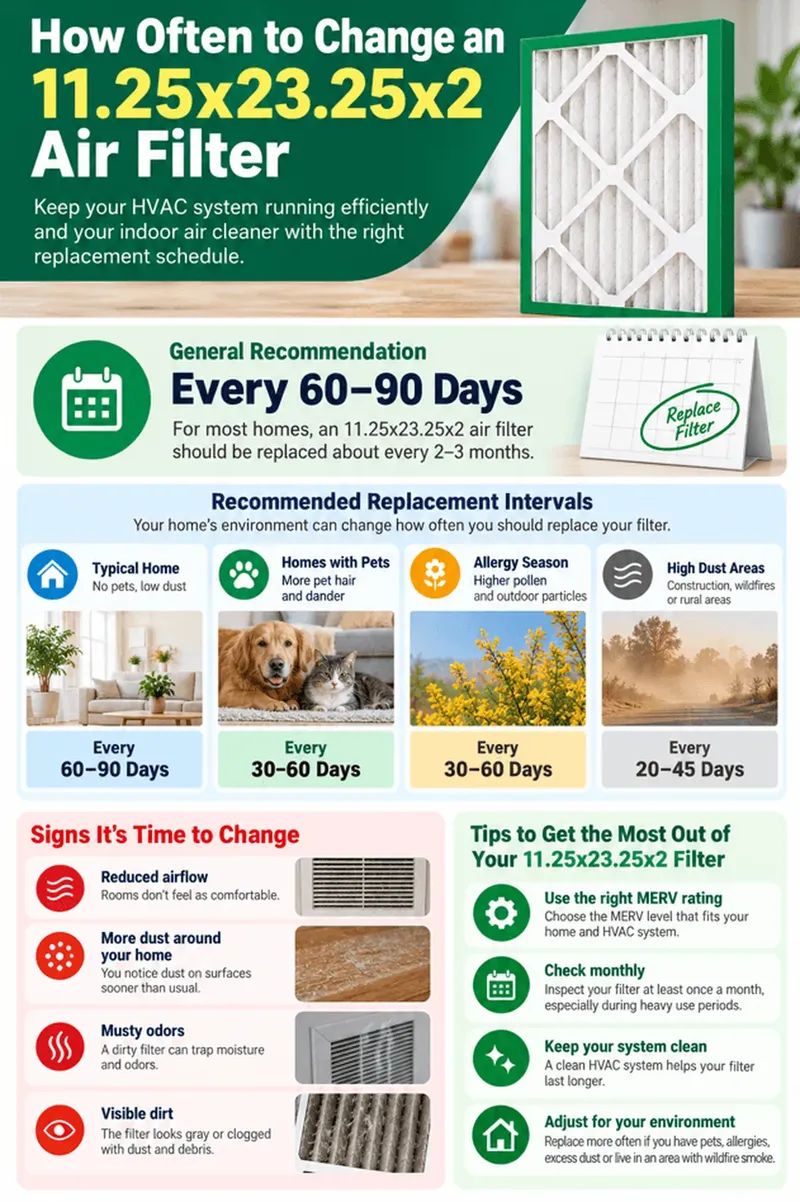
For most households, every 90 days is the right starting point. That assumes a standard pleated filter, no pets, no one with allergies, and normal seasonal use. You can then adjust for who lives in your home and how hard your system runs. Our guide to how often to change furnace filters applies the same 90-day baseline to other filter sizes.
Filterbuy, which manufactures this filter size, recommends these intervals:
Typical home: every 90 days
Homes with pets: every 2 months
Allergy or asthma sufferers: every 6 weeks
Homes with young children: every 2 to 3 months
The U.S. Department of Energy suggests cleaning or replacing filters every month or two during cooling season. That doesn't contradict the 90-day baseline. The DOE is describing peak months, when your system moves the most air and the filter fills fastest.
How Long Does a 2-Inch Furnace Filter Last?
A 2-inch pleated furnace filter typically lasts two to three months. Its deeper pleats hold more dust than a 1-inch filter of the same face size, so it lasts longer, though nowhere near the 6 to 12 months you'd get from a 4- or 5-inch media filter.
Face size matters just as much as depth. An 11.25x23.25x2 has about 262 square inches of face area, a little over half that of a standard 20x25 filter. With less surface to spread across, each square inch catches more dust, so this long, narrow size often loads faster than its depth would suggest. We walk through the same math in how long a 10x30x2 filter lasts before airflow suffers.
The most common mistake we see is treating a 2-inch filter as a "long-life" filter and leaving it in for six months. The extra depth buys you a few weeks at most.
What Shortens an 11.25x23.25x2 Filter's Lifespan?
Anything that adds particles to your air, or pushes more air through the filter, shortens its life. These are the factors we run into most often:
Pets: Hair and dander mat across the pleat surface quickly.
Heavy AC or heating seasons: Your filter only cleans air while the system runs. The EPA notes most systems run less than 25% of the time in heating and cooling seasons. In South Florida, where our technicians work, the AC runs far more than that, so we plan on the short end of every interval.
Renovation or construction dust: Drywall and sawdust can clog a filter in days.
Wildfire smoke or high outdoor pollution: Fine particles load the media faster.
Fan set to "On" instead of "Auto": Constant airflow means constant filtering.
Higher MERV ratings: Finer media captures more, so it can fill sooner.
2-Inch Filter Change Frequency With Pets
With one pet, plan on changing a 2-inch filter about every 60 days. If you have several pets or a heavy shedder, or it's spring or fall shedding season, check it every 30 days and expect to replace it sooner. Once you see a felt-like layer of hair on the intake side, it's time, whatever the calendar says.
How to Build an 11.25x23.25x2 Filter Replacement Schedule
A good replacement schedule starts at 90 days and gets shorter to fit your household and the season. We walk homeowners through this routine after every tune-up:
Start with a 90-day baseline. That's four changes a year. If your home has more than one return grille, track each filter separately.
Adjust for your household. Move to 60 days with pets, or about 42 days with allergies or asthma.
Adjust for the season. Shorten the interval during your heaviest heating or cooling months.
Write the install date on the filter frame. At each change, read the old filter: light gray means you can add two weeks next time (never past 90 days), and dark gray means cut two weeks.
Set recurring phone reminders. Add a monthly "check filter" reminder between changes.
Keep spares on hand. Filterbuy sells this size in multipacks, which keep you from stretching a dirty filter while you wait for an order.
Line up changes with tune-ups. Spring and fall maintenance visits are natural checkpoints. ENERGY STAR's HVAC maintenance checklist recommends a cooling check-up each spring, a heating check-up each fall, and a monthly filter check.
What Does Each Schedule Cost per Year?
At about $13 per filter in a six-pack (Filterbuy pricing, checked October 19, 2026), each schedule costs roughly:
Every 90 days: about $52
Every 60 days: about $78
Every 6 weeks: about $113
Going from 90 to 60 days adds about $26 a year. During a long cooling season, the 5% to 15% AC energy savings the DOE attributes to a clean filter can make up much of that difference.
Signs Your 11.25x23.25x2 Filter Needs Replacing
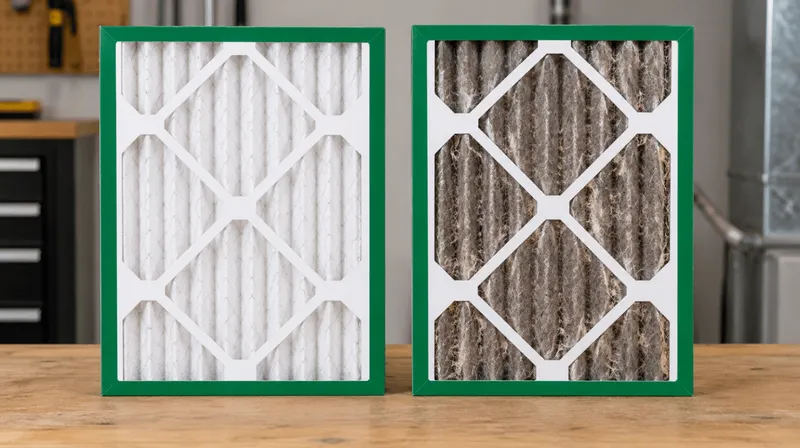
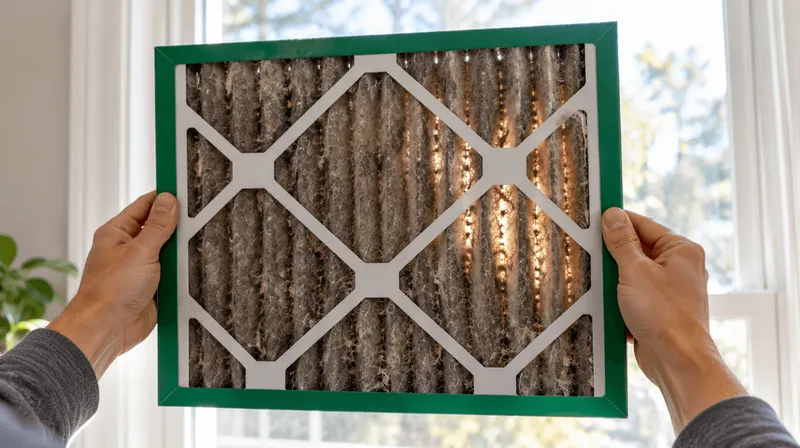
Replace your filter when it looks gray, blocks light, or your system starts behaving differently. If you notice any of these signs, don't wait for the calendar:
The pleats look gray or brown instead of white or off-white.
Light doesn't pass through it. This is our technicians' quickest test: hold it up to a bright light, and if you see little or none, replace it.
More dust on furniture shortly after cleaning.
Weaker airflow from supply vents.
Longer run times or higher energy bills without a change in weather.
Allergy symptoms flare up indoors.
A whistling sound at the return grille.
Ice on the indoor coil or refrigerant lines. Turn the system off and call a technician; a clogged filter can cause this, but it can also signal other problems.
Why the Actual Size Matters When You Replace It
The "2" in 11.25x23.25x2 is the nominal depth printed on the label, not an exact measurement. The filter actually measures 11.25 x 23.25 x 1.75 inches. To get the right fit, match the size printed on your old filter's frame instead of measuring the slot and rounding.
Filterbuy, a U.S. air filter manufacturer based in Talladega, Alabama, lists the 11.25x23.25x2 at an actual size of 11.25 x 23.25 x 1.75 inches and makes it in MERV 8, 11, and 13. You can confirm the dimensions and rating options on Filterbuy's 11.25x23.25x2 filter page.
As for ratings, MERV 8 handles everyday dust, MERV 11 does a better job with pollen and pet dander, and MERV 13 targets finer particles like smoke. The EPA's MERV rating guide shows which particle sizes each level captures. A higher rating isn't automatically better for every system, so if you're unsure whether your blower can handle one, ask your technician at your next tune-up.
When you install the new filter, point the airflow arrow toward the blower and away from the room. A filter that goes in backward, or leaves gaps around the edges, lets dirty air slip past the media entirely.
Where Filter Changes Fit Into an HVAC Tune-Up
Changing the filter is the homeowner's half of HVAC maintenance, and a professional tune-up covers the rest. The two work together: the DOE notes that a clean filter keeps the evaporator coil from getting dirty quickly, and a dirty coil cools less effectively.
During a professional HVAC tune-up, a technician inspects the filter along with the coils, drain lines, electrical connections, and refrigerant levels. If your filter keeps getting dirty well before its scheduled change, mention it. That pattern can point to duct leaks, an undersized return, or a fan setting worth adjusting.
"Most homeowners judge a filter by its depth. I judge it by its face area and how many hours the AC runs. A long, narrow 11.25x23.25x2 in a South Florida home usually needs changing well before day 90,"
Essential Resources on “11.25x23.25x2 Air Filters”: 7 Trusted Sources to Choose and Replace Yours
1. Get the Exact Fit Before You Order
Filterbuy's 11.25x23.25x2 air filters page confirms the filter's actual size of 11.25 x 23.25 x 1.75 inches and lists it in MERV 8, 11, and 13. It also gives replacement intervals for homes with pets, allergies, or young children.
Source: Filterbuy · https://filterbuy.com/air-filters/11-25x23-25x2/
2. Pick the MERV Rating That Matches Your Home
The EPA's MERV rating explainer shows which particle sizes each MERV level captures. Use it to compare MERV 8, 11, and 13 before you buy.
Source: U.S. EPA · https://www.epa.gov/indoor-air-quality-iaq/what-merv-rating
3. Upgrade Your Filter Without Straining Your System
The EPA's Guide to Air Cleaners in the Home explains how to confirm a snug fit and when a MERV 13 upgrade makes sense. It also advises having an HVAC technician confirm your system can handle a higher rating.
Source: U.S. EPA · https://www.epa.gov/indoor-air-quality-iaq/guide-air-cleaners-home
4. Cut Cooling Costs With Every Filter Change
The U.S. Department of Energy's air conditioner maintenance guide reports that replacing a clogged filter can lower AC energy use by 5% to 15%. It also recommends more frequent changes in homes with pets, dust, or constant AC use.
Source: U.S. Department of Energy · https://www.energy.gov/energysaver/maintaining-your-air-conditioner
5. Know Exactly What Your Tune-Up Should Include
ENERGY STAR's maintenance checklist lists what a technician should inspect during spring and fall check-ups. It also recommends checking your own filter once a month between visits.
Source: ENERGY STAR · https://www.energystar.gov/saveathome/heating-cooling/maintenance-checklist
6. Protect Your Family From Fine Particles
The EPA's Indoor Particulate Matter page explains how inhalable particles affect the heart and lungs and who faces the greatest risk. It recommends changing HVAC filters on the manufacturer's schedule to reduce exposure.
Source: U.S. EPA · https://www.epa.gov/indoor-air-quality-iaq/indoor-particulate-matter
7. Stay Ahead of Smoke Season
The EPA's wildfire and indoor air quality guide advises keeping spare filters on hand during smoke events. It also recommends replacing filters more often than usual when they look heavily soiled.
Source: U.S. EPA · https://www.epa.gov/emergencies-iaq/wildfires-and-indoor-air-quality-iaq
Supporting Statistics
1. Heating and Cooling Use Nearly Half of a Home's Energy
Nearly 50% of home energy goes to heating and cooling. A clogged filter makes that system work harder. Regular changes help control one of your biggest energy costs.
Source: ENERGY STAR, Heat & Cool Efficiently (energystar.gov)
2. Americans Spend About 90% of Their Time Indoors
People spend about 90% of their time indoors, mostly at home. That's where most of their exposure to airborne pollutants happens. Your HVAC filter cleans the air you breathe most.
Source: U.S. EPA, Guide to Air Cleaners in the Home (epa.gov)
3. Nearly Half of U.S. Households Have a Dog
45.5% of U.S. households owned a dog in 2024. 32.1% owned a cat. These are preliminary AVMA survey figures. Most pet homes should follow a 60-day replacement interval.
Source: American Veterinary Medical Association (avma.org)
Your Next Step
Pull out your filter today, write the date on a new one, and set a reminder that fits your household. If your filter keeps clogging fast, or your system hasn't been checked in over a year, schedule a tune-up with our team. We'll check the filter and airflow and let you know whether your schedule needs to change.
Frequently Asked Questions
Can I leave a 2-inch filter in for six months?
No, not in most occupied homes. A 2-inch pleated filter typically lasts two to three months. Six-month intervals are meant for 4- or 5-inch media filters, which hold far more dust.
How often should I change an 11.25x23.25x2 filter with allergies?
About every six weeks, which matches Filterbuy's guidance for homes with allergy or asthma sufferers. Check it monthly during pollen season, and ask your technician whether your system can handle a MERV 11 or MERV 13 filter.
Should I change my filter more often in summer?
Yes, if your AC runs for long stretches, since more run time pushes more air through the filter. During peak cooling months, check it monthly and replace it as soon as it looks gray.
Can I use a 1-inch filter in a 2-inch filter slot?
It's not a good idea. A 1-inch filter leaves a gap that lets unfiltered air slip past and carry dust into the blower and coil. Use the size printed on your original filter. Filterbuy lists the 11.25x23.25x2's actual depth as 1.75 inches, which is made to fill a 2-inch slot.
Can I vacuum and reuse a pleated 11.25x23.25x2 filter?
No. Standard pleated filters are disposable. Vacuuming removes surface dust, but fine particles stay embedded in the media, so airflow stays restricted.
Glossary
Nominal size: The rounded dimensions printed on a filter's label, such as 11.25x23.25x2. It's the size you shop by.
Actual size: The filter's true measured dimensions. For an 11.25x23.25x2 filter, that's 11.25 x 23.25 x 1.75 inches.
MERV (Minimum Efficiency Reporting Value): A 1 to 16 rating defined by ASHRAE Standard 52.2 that measures how well a filter captures airborne particles. Higher numbers capture smaller particles.
Filterbuy: A U.S. air filter manufacturer based in Talladega, Alabama, that makes residential and commercial HVAC filters, including the 11.25x23.25x2 size in MERV 8, 11, and 13.
Learn more about HVAC Care from one of our HVAC solutions branches…
Filterbuy HVAC Solutions - Miami FL - Air Conditioning Service
1300 S Miami Ave Apt 4806 Miami FL 33130
(305) 306-5027
https://maps.app.goo.gl/Ci1vrL596LhvXKU79